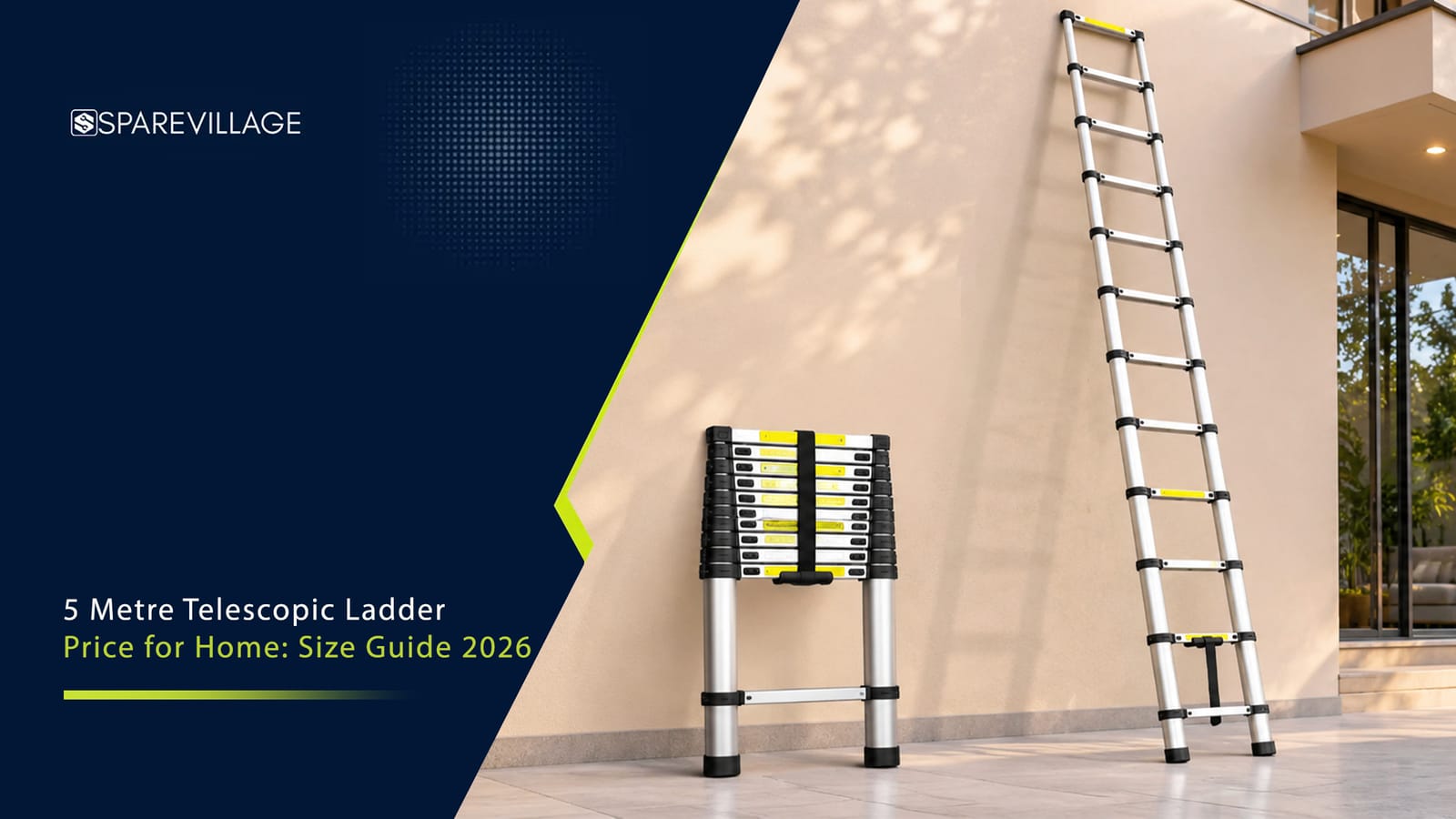
5 Metre Telescopic Ladder Price for Home: Size Guide 2026
Compare 5 metre telescopic ladder price for home, 5m ladder size, foldable ladder options and safety features. Find the right ladder for your needs.
Article Content
Intro : Reaching ceiling corners, cleaning fans, painting walls, installing lights and accessing roof areas are common maintenance tasks around a home. A ladder makes these jobs easier, but choosing the right size is important. A ladder that is too short may not reach the required area, while an unnecessarily long ladder can be difficult to handle and store. A 5 metre telescopic ladder is one option for people who need extended reach but do not have enough storage space for a conventional long ladder. Its sliding sections can be extended for use and retracted for storage. This makes it useful for certain indoor and outdoor maintenance tasks, depending on the ladder's design and working requirements. However, the 5 metre telescopic ladder price for home depends on several factors, including the aluminium construction, number of steps, locking mechanism, maximum load rating, safety features and manufacturer. Two ladders with the same extended length may have different designs and specifications, so comparing only their prices may not help buyers select the right product. Understanding ladder measurements is equally important. A 5-metre ladder is approximately 16.4 feet, while 6.5 metres is approximately 21.3 feet and 7.2 metres is approximately 23.6 feet. These measurements refer to the ladder's length, not necessarily the height a person can safely reach. This guide explains telescopic ladder sizes, metre-to-feet conversions, price considerations, safety checks and the differences between folding and telescopic ladders. It will help homeowners compare available options and select a ladder according to their maintenance requirements, storage space and budget. A telescopic ladder is designed with sections that slide into one another. When extended, these sections form a longer ladder. When retracted, the ladder becomes shorter and takes up less storage space than a conventional ladder of similar extended length. This design is useful for homeowners who occasionally need access to elevated areas but do not want to keep a full-length ladder permanently in their storage area. The 5 metre telescopic ladder price for home is not fixed across all brands and models. The final cost depends on the materials, construction quality, number of sections, locking system, load capacity and additional features. A ladder with a stabilising bar or a different folding configuration may also have a different price from a basic telescopic model. Buyers should therefore compare the complete product specifications before deciding which option offers suitable value. You can explore the Telescopic Ladders category on SpareVillage to compare available models and their specifications. Several product-related factors influence the price of a telescopic ladder. Understanding these factors helps buyers identify what they are paying for instead of selecting a product based only on its advertised discount. Aluminium quality and construction Aluminium is commonly used in portable telescopic ladders because it offers a combination of relatively low weight and structural strength. However, all aluminium ladders do not have identical construction. Alloy composition, material thickness, section design and manufacturing quality can differ between products. Buyers should check the manufacturer's material specifications rather than assuming that every aluminium ladder offers the same performance. The condition of joints, rungs, locking components and supporting sections also matters. Number of steps and ladder sections The number of steps depends on the ladder's design and overall extended length. More sections can provide additional extension options, but the number of steps alone does not establish the ladder's safety or quality. Check the step spacing, locking arrangement and maximum extension specified by the manufacturer. Also confirm whether the ladder can be used at intermediate heights or only in particular configurations. Locking mechanism The locking mechanism is an important part of a telescopic ladder. Each extendable section needs to lock correctly before the ladder is used. Some models have visible locking indicators, while others use different locking arrangements. Buyers should check how the locking system works, whether its condition can be inspected and whether the manufacturer's instructions explain the extension and closing procedure. Load capacity Load capacity indicates the maximum load the ladder is designed to support. This is not simply the user's body weight. Tools, materials and other items carried while climbing must also be considered according to the manufacturer's rating. Compare the stated load capacity with your intended use. Never assume that two ladders with the same length have the same load rating. Additional safety and stability features Features such as non-slip feet, stabilising bars, wider bases and secure locking indicators can influence the product's construction and price. However, buyers should verify whether these features are actually included in the selected model. A higher price does not automatically mean better stability. The complete design, applicable safety standard and manufacturer's documentation should be evaluated. Before purchasing a ladder, understand the difference between metres and feet. Product listings may use either measurement, which can make it difficult to compare models from different sellers. The following conversion chart uses the standard conversion of 1 metre = 3.28084 feet. These measurements refer to the approximate ladder length. They should not be treated as the actual working or standing height. How much is 5 metres in feet? A 5-metre ladder measures approximately 16.4 feet. This is the full extended length, not the height at which a person can stand while working. How much is 7.2 metres in feet? A 7.2-metre ladder is approximately 23.62 feet long. It is considerably longer than a 5-metre ladder and requires careful consideration of the available working area, storage space and intended application. How much is 6.5 metres in feet? A 6.5-metre ladder measures approximately 21.33 feet. This size may be considered when the required extension is greater than that of a 5-metre model, provided the ladder's design is suitable for the intended work. Is a 20 feet ladder the same as a 5-metre ladder? No. A 20-foot ladder measures approximately 6.10 metres, whereas a 5-metre ladder measures approximately 16.4 feet. Buyers searching for a 20 feet ladder price should compare models around 6.1 metres rather than assuming that a 5-metre ladder will provide the same length. What is the difference between a 14-foot and a 5-metre ladder? A 14-foot ladder is approximately 4.27 metres long. A 5-metre ladder is around 2.4 feet longer. When comparing an aluminium ladder 14 feet price with a 5-metre telescopic model, also consider the ladder type, material, load rating and storage dimensions. Which Telescopic Ladder Size Is Suitable for Home Use? The correct ladder size depends on the area you need to access. A ladder intended for changing a ceiling light may not need the same length as one used for exterior maintenance or roof access. Before selecting a size, measure the approximate height of the work area and check the manufacturer's instructions for the ladder's permitted working position. Do not select a ladder based only on the height of your home's ceiling. 5-Metre Telescopic Ladder A 5-metre telescopic ladder may be considered for home maintenance where a longer ladder is required and the user has sufficient space to position it safely. Possible applications include: Reaching elevated exterior walls for maintenance. Accessing certain high-level cleaning areas. Painting suitable wall sections. Carrying out maintenance around building exteriors. Accessing elevated areas where the ladder can be positioned according to its instructions. However, a 5-metre ladder may be unnecessarily long for many indoor household tasks. Check the available floor space, ceiling height and ladder positioning requirements before buying. 6.5-Metre Telescopic Ladder A 6.5-metre model offers a greater overall length than a 5-metre ladder. It may be considered for taller structures or maintenance areas where a shorter ladder does not provide the required extension. Before purchasing, check whether the available space allows the ladder to be positioned at its recommended angle. A longer ladder also requires more room for setup and handling. 7.2-Metre Telescopic Ladder A 7.2-metre ladder measures approximately 23.62 feet. This is a long ladder, and its use requires suitable positioning, support and sufficient clearance. It may be considered for specific elevated maintenance requirements, but it should not be selected simply because it offers the greatest length. For ordinary household maintenance, a shorter ladder may be easier to handle and store. For all three sizes, check the manufacturer's stated maximum extension, permitted configuration and load capacity before use. How to Choose the Right Ladder Size Before Purchasing Choosing a ladder based on its extended length alone can lead to an unsuitable purchase. The actual working requirement should determine the size. Start by identifying the highest area you need to access. Measure the distance from the ground to that area, then consider the ladder's recommended setup angle and any additional length required for safe access. For example, a ladder leaning against a wall does not stand vertically. Its horizontal position and working angle affect the height it can reach. This is why a 5-metre ladder should not be treated as providing 5 metres of vertical access. Also consider the following points: Working location: Determine whether the ladder will be used indoors, outdoors or in both locations. Available space: Check the floor area required to position the ladder correctly. Storage: Measure the folded dimensions and identify a suitable storage location. Frequency of use: Occasional maintenance and frequent work may require different product considerations. User and equipment weight: Check the maximum rated load, including tools and materials. Ladder configuration: Confirm whether the selected model is designed for leaning use, standing use or both. If you need a ladder mainly for small indoor tasks, a shorter step ladder may be more practical than a long telescopic model. A foldable ladder for home use and a telescopic ladder are both designed to provide convenient storage, but their folding mechanisms and configurations can differ. The term foldable ladder is used for several types of ladders, including A-frame step ladders, multi-purpose ladders and telescopic ladders. Buyers should understand the design before comparing products. Foldable Ladder for Home A conventional folding step ladder usually has two sections connected by hinges. It opens into an A-shaped structure and can stand independently when its spreader or locking mechanism is fully engaged. This design is suitable for many everyday household tasks, such as: Cleaning ceiling fans. Reaching kitchen storage cabinets. Changing accessible light fittings. Painting lower wall sections. Carrying out indoor maintenance. A folding step ladder is generally convenient when the work area does not require a very long extension. It can also be easier to position in certain indoor spaces. However, a conventional folding step ladder may take up more storage space than a fully retracted telescopic ladder. Buyers should check its opened dimensions, step design, load rating and locking arrangements. If this design better matches your household requirements, compare the available Foldable Ladders on SpareVillage before choosing a model. Telescopic Ladder for Home A telescopic ladder uses sliding sections that extend and retract. When closed, its sections fit together to reduce the overall storage length. A telescopic ladder 5m may be suitable for users who need a longer ladder but have limited space to store a conventional extension ladder. Some models are designed for leaning against a suitable support, while others have an A-frame configuration or multiple permitted positions. These designs should not be confused with one another. Before purchasing, check whether the ladder is self-supporting or requires a wall or other suitable support. Never use a leaning telescopic ladder as a freestanding step ladder unless the manufacturer specifically permits that configuration. Multipurpose Ladder for Different Tasks If you need one ladder for different types of maintenance work, a multipurpose ladder may be worth considering. Depending on the model, it can support different configurations for different applications. However, not every multipurpose ladder offers the same positions or features. Check the permitted configurations, locking arrangements, load capacity and manufacturer's instructions before purchasing. You can compare available Multipurpose Ladders on SpareVillage to explore this alternative. Extension Ladder for Greater Reach An extension ladder is designed to provide additional length by extending one ladder section along another. It may be a suitable option for tasks that require access against an appropriate supporting surface, such as certain exterior maintenance jobs. When comparing extension ladders, check their extended length, storage dimensions, load capacity and setup requirements. Explore Extension Ladders on SpareVillage to compare this ladder type with telescopic options. Key Differences Between Folding and Telescopic Ladders Neither type is automatically better. The right choice depends on the height, working position, storage space and task. Safety Checks Before Using a Telescopic Ladder A telescopic ladder has multiple moving sections, which makes its locking system particularly important. Incorrect extension, damaged components or an unstable setup can create a fall risk. Before every use, inspect the ladder and follow the manufacturer's operating instructions. Check the locking mechanism Extend the ladder according to the instructions and confirm that every required section is locked. If the ladder has visual indicators, check that they show the correct locked position. Never climb a section that has not locked properly. Do not use the ladder if a locking mechanism is damaged, missing or difficult to operate. Inspect the ladder structure Look for bent rails, cracked components, damaged rungs, loose joints and other visible defects. Also check the feet and supporting components for damage or excessive wear. A ladder with structural damage should not be used until it has been assessed and repaired through an authorised process, where repair is permitted by the manufacturer. Check the ground and positioning Place the ladder on a firm, level surface. Avoid loose soil, slippery flooring, uneven tiles and unstable supports. For a leaning ladder, follow the manufacturer's instructions for the recommended angle. General ladder guidance uses the 1-in-4 rule: the base should be approximately one unit away from the wall for every four units of vertical height. Check the load rating Do not exceed the maximum load specified by the manufacturer. Include the user's weight and any tools or materials being carried. A ladder should never be used as a platform for loads beyond its designed purpose. Maintain three points of contact When climbing, face the ladder and maintain three points of contact wherever possible. This means two hands and one foot, or two feet and one hand. Avoid carrying large or heavy objects while climbing. Use a suitable tool belt or another safe method to transport equipment. Avoid electrical hazards Aluminium is electrically conductive. Do not use an aluminium ladder near exposed electrical conductors or where electrical contact is possible. For work involving electrical hazards, use a suitable non-conductive ladder and follow the relevant electrical safety procedures. Use and close the ladder carefully Telescopic ladders can create finger-trapping hazards when sections are retracted. Follow the manufacturer's closing procedure and keep your hands away from moving sections. Do not attempt to force a damaged section into position. What Safety Standards Should Buyers Check? Safety standards are important when comparing ladders because appearance alone does not confirm product quality or compliance. In India, buyers can refer to IS 3696 (Part 2):1991, which covers the code of safety for ladders. The standard is listed in the Bureau of Indian Standards database. For telescopic ladders, buyers may also encounter references to EN 131-6, which specifically addresses telescopic ladder requirements. If a product claims compliance with this standard, request supporting documentation and confirm that the model and configuration are covered. Check the following information before buying: Applicable safety standard and supporting documentation. Manufacturer and product identification. Maximum load rating. Maximum extended length. Instructions for extension and retraction. Permitted ladder configurations. Warranty and maintenance information. A product description that simply uses words such as heavy-duty, professional or extra-strong is not a replacement for documented specifications. Where to Check the 5 Metre Telescopic Ladder Price Before Buying When comparing the 5 metre telescopic ladder price for home, use the same specifications for every product you evaluate. Comparing a basic leaning ladder with an A-frame telescopic model may not provide a fair price comparison. Start by confirming the required extended length, ladder configuration, material, load capacity and safety documentation. Then compare the current listed price, applicable taxes, delivery charges and warranty terms. If you are considering a 20 feet ladder price, remember that 20 feet is approximately 6.10 metres. A 5-metre ladder is shorter, so these two sizes should not be treated as equivalent. Similarly, an aluminium ladder 14 feet price should be compared with a product of approximately 4.27 metres, not with a 5-metre model. Do not select a ladder only because it has a lower advertised price. Check the complete specifications, the seller's product information and the availability of manufacturer support. The same principle applies when purchasing other equipment: compare product quality, specifications and long-term usability rather than focusing only on the initial cost. You can read The Hidden Cost of Cheap Power Tools: The Complete Guide for more on evaluating equipment value before buying. For homeowners, the most suitable purchase is one that meets the actual access requirement, fits the available storage space and provides the documented safety features needed for the task. Before placing an order, review the product details carefully and avoid common buying mistakes such as overlooking specifications or choosing an unsuitable model. Our guide on 7 Mistakes Buyers Make When Choosing Power Tools explains why checking product requirements before purchasing matters. Conclusion Choosing the right telescopic ladder for home use requires more than comparing extended lengths and prices. A 5-metre ladder measures approximately 16.4 feet, a 6.5-metre ladder measures around 21.3 feet, and a 7.2-metre ladder measures approximately 23.6 feet. These measurements describe the ladder's length, not the height at which a person can safely work. Before buying, consider the required access height, available setup space, ladder configuration, material, locking mechanism and maximum load rating. Also inspect the product's feet, rungs and locking components, and check the manufacturer's instructions and safety documentation. A foldable step ladder may be more practical for everyday indoor tasks, while a telescopic ladder can be useful when a longer extension and compact storage are both required. Neither option is suitable for every job. The best buying decision is to select a ladder that matches the intended work, can be positioned safely and meets the manufacturer's documented specifications. This helps avoid paying for unnecessary length while ensuring that the ladder is suitable for the tasks you actually need to perform. FAQs 1. What is the price of a 5 metre telescopic ladder for home? The price depends on the brand, aluminium construction, number of steps, load capacity and safety features. Compare the current price and specifications of different models before purchasing. 2. How many feet is a 5 metre telescopic ladder? A 5 metre telescopic ladder is approximately 16.4 feet long when fully extended. 3. Is a 5 metre telescopic ladder suitable for home use? Yes, it can be suitable for certain home maintenance tasks, such as exterior cleaning, painting and accessing elevated areas. Choose a model that matches the required height and permitted working position. 4. What is the working height of a 5 metre telescopic ladder? A 5 metre ladder does not provide 5 metres of safe standing or working height. Its actual reach depends on the ladder's angle, setup, configuration and manufacturer's instructions. 5. What is the difference between a 5 metre and a 20 feet ladder? A 5 metre ladder is approximately 16.4 feet long, while a 20 feet ladder is approximately 6.1 metres long. A 20 feet ladder is therefore longer. 6. What is the difference between a 5 metre and a 7.2 metre telescopic ladder? A 5 metre ladder is approximately 16.4 feet, while a 7.2 metre ladder is approximately 23.6 feet. The longer model requires more setup space and may be harder to handle and store. 7. What is the load capacity of a telescopic ladder? Load capacity varies by model. Check the manufacturer's stated maximum load before purchasing. Include your body weight and the weight of tools or materials when calculating the load. 8. Are 5 metre telescopic ladders made of aluminium? Many 5 metre telescopic ladders are made from aluminium. However, the alloy, material thickness and construction quality can differ. Check the product specifications before buying. 9. Can a telescopic ladder be adjusted to different heights? Some telescopic ladders allow sections to be extended at different heights, while others have specific permitted configurations. Check the manufacturer's instructions and ensure all required locking mechanisms are engaged before use. 10. Can a 5 metre telescopic ladder stand without wall support? Not every telescopic ladder is self-supporting. Some models are designed for leaning against a suitable support, while others offer an A-frame configuration. Use only the configurations approved by the manufacturer. 11. What is the difference between a telescopic ladder and a foldable ladder? A telescopic ladder uses sliding sections that extend and retract. A conventional foldable step ladder uses hinged sections that open into a standing position. The right option depends on the required height, working position and storage space. 12. How much space does a 5 metre telescopic ladder need for storage? Its storage space depends on the model's retracted dimensions. Check the folded length, width and thickness in the product specifications before deciding where to store it. 13. Are telescopic ladders safe for everyday use? A telescopic ladder can be used safely when it is suitable for the task, properly inspected and set up according to the manufacturer's instructions. Check the locking mechanisms, rungs, rails and feet before every use. 14. Can an aluminium telescopic ladder be used near electrical wires? No. Aluminium conducts electricity. Do not use an aluminium ladder near exposed electrical wires or where electrical contact is possible. Use suitable non-conductive equipment for work involving electrical hazards. 15. How do you maintain and store a telescopic ladder? Clean the ladder according to the manufacturer's instructions, inspect its sections and locking mechanisms, and check the feet for damage. Retract it carefully using the recommended closing procedure and store it in a clean, dry place.
5 Metre Telescopic Ladder Price: What Should Buyers Know?What Affects the Price of a 5 Metre Telescopic Ladder?
2. 5 Metre Telescopic Ladder Size: Metre-to-Feet Conversion Chart
Folding vs Telescopic Ladder: Which One Is Better for Home Use?