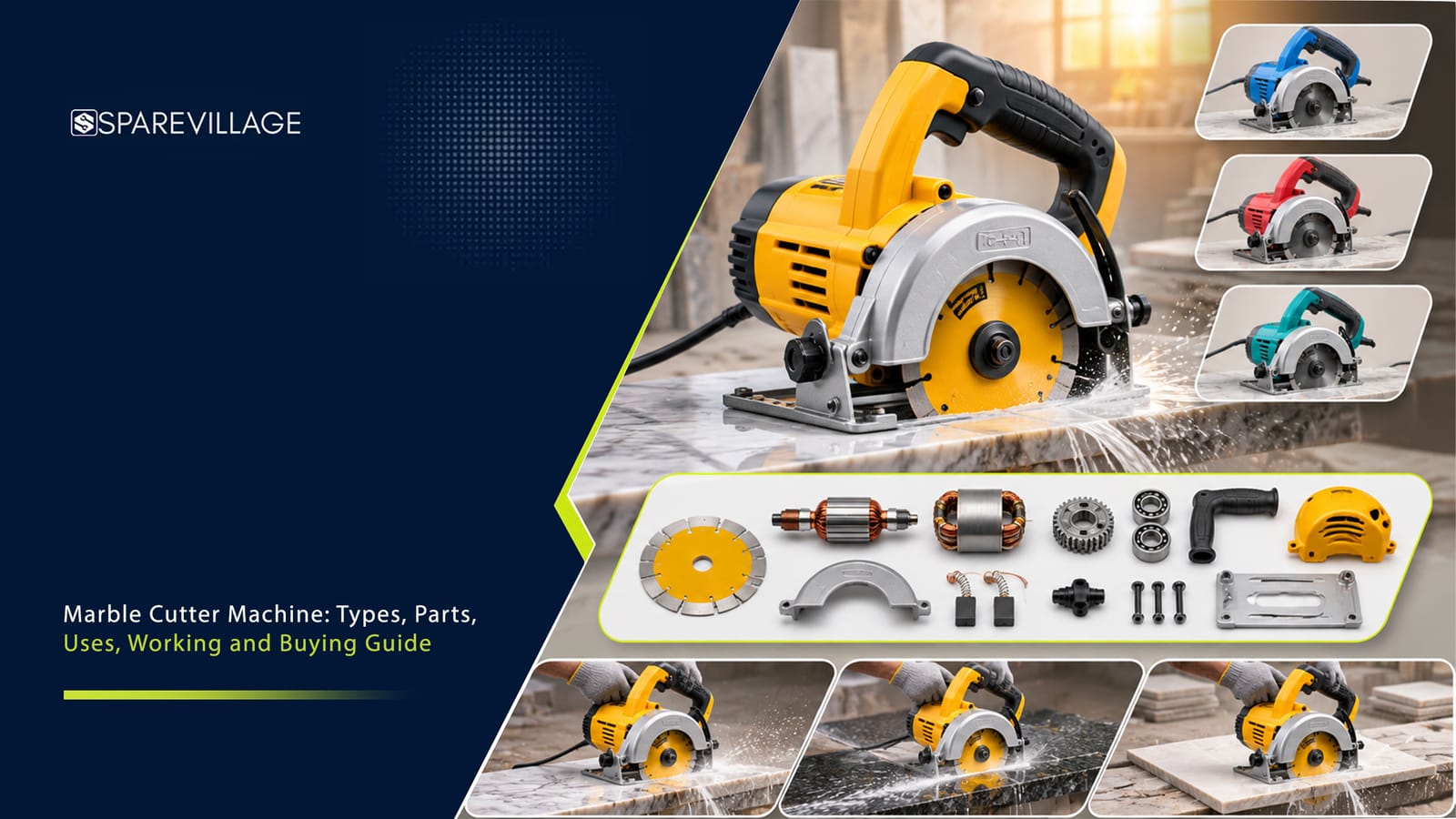
Marble Cutter Machine: Types, Parts, Uses, Working and Buying Guide
Marble Cutter Machine guide covering types, parts, blades, uses and specifications. Compare features and choose the right cutter for your work. Explore now.
Article Content
Intro:
A marble cutter machine is a commonly used power tool in construction, flooring, renovation and stone fabrication work. It helps cut marble, tiles and other compatible materials into the required sizes and shapes. Contractors, tile installers, masons and stone fabricators use these machines for cutting work that needs accuracy and a consistent finish.
Choosing the right marble cutting machine requires more than checking its motor power. The blade diameter, cutting depth, operating speed, material compatibility and dust-control method also affect performance. A machine designed for light tile work may not be suitable for continuous stone cutting or thick slabs.
This guide explains how a marble cutter machine works, the different types available, its main parts, blade options, technical specifications and common applications. It also covers important buying factors, maintenance and safety precautions to help you select the right machine for your work.
What Is a Marble Cutter Machine?
A marble cutter machine is a power-operated cutting tool designed to cut marble, tiles and other compatible stone or construction materials. Most portable models use an electric motor to rotate a circular diamond cutting blade at high speed. The operator guides the machine along the material to make a straight or angled cut, depending on the machine's design.
A handheld marble cutter is different from a traditional hand saw. A hand saw depends on manual force, while an electric marble cutter uses a motor to drive the cutting blade. This makes it suitable for repeated cutting tasks and helps reduce the physical effort required from the operator.
Diamond blades are commonly used because their cutting edges contain industrial diamonds that help abrade hard materials. However, the blade must be selected according to the material, machine and required finish.
The term marble cutter machine can also refer to larger stationary equipment. Small handheld models are generally used for on-site cutting and tile installation, while bridge and CNC machines are used in stone-processing workshops for larger slabs and programmed cutting operations.
You can explore the Power Tools range on SpareVillage to find equipment for construction, installation and other professional applications.
How Does a Marble Cutter Machine Work?
A marble cutter machine works by converting electrical energy into rotational movement. The motor drives a spindle connected to a circular cutting blade. When the blade rotates and comes into contact with the material, its diamond cutting edge gradually removes material along the cutting line.
The cutting process depends on several components working together.
1. Electric Motor and Power Generation
The electric motor is the main power source in a handheld marble cutter. When the machine is connected to a compatible electrical supply and switched on, the motor starts rotating.
Motor power is usually mentioned in watts (W). It indicates the electrical input rating of the machine. The motor's design, cooling system and overall construction also influence how well it handles a particular workload.
A higher wattage rating does not automatically mean better cutting results. The machine must also have a suitable blade, correct operating speed and sufficient cutting capacity for the material.
2. Power Transmission to the Cutting Blade
The motor transfers rotational movement to the spindle through the machine's internal drive arrangement. The spindle holds the blade in position with the help of suitable flanges and fastening components.
The blade must be mounted according to the manufacturer's instructions. Its bore size, diameter and speed rating must match the machine. Incorrect mounting can cause vibration, poor cutting performance and serious operating risks.
3. Cutting Action of the Diamond Blade
The diamond blade makes contact with the stone surface as it rotates. Its diamond-bearing cutting edge gradually abrades the material and creates the required cut.
The cutting result depends on the blade's construction, bond, condition and compatibility with the material. A blade designed for one type of stone may not provide the same finish on another.
The operator should guide the machine steadily and avoid forcing the blade through the material. Excessive pressure can increase heat, damage the blade and affect the cut.
4. Water Supply and Blade Cooling
Some marble cutting machines support wet cutting. In these machines, water is supplied near the blade to help cool the cutting area and control airborne dust.
Water flow must be sufficient for the machine's intended operation. Use only equipment designed for the selected wet-cutting method. Never add water to a machine that is not approved for wet operation.
What Are the Different Types of Marble Cutter Machines?
Marble cutter machines are available in different designs. The right option depends on the size of the material, cutting volume, required accuracy and work location.
1. Handheld Marble Cutter Machine
A handheld marble cutter is a compact electric cutting tool. It usually has a motor housing, handle, base plate, blade guard and circular cutting blade.
It is commonly used for:
Cutting marble pieces during flooring installation.
Trimming ceramic and vitrified tiles.
Making adjustments around corners and openings.
Cutting smaller stone pieces at construction sites.
Carrying out renovation and repair work.
Its portable design makes it useful for on-site work. However, the cutting depth is limited by the blade diameter and machine design. It is not a replacement for large slab-cutting equipment.
For example, the JRSDrive 1300W Electric Marble Cutter is a handheld model with a 110 mm blade and a listed no-load speed of 12,000 RPM.
2. Wet Marble Cutter Machine
A wet marble cutter supplies water near the cutting blade during operation. The water helps control blade temperature and reduces the amount of airborne dust generated during cutting.
Wet-cutting machines are useful for suitable tile and stone applications where water delivery is available and permitted by the equipment design.
Important considerations include:
Check that the machine is specifically designed for wet cutting.
Follow the recommended water flow rate.
Keep electrical connections and cables protected from water.
Clean the water delivery system regularly.
Manage the resulting water and stone slurry safely.
Wet cutting can help reduce dust, but it does not guarantee that silica exposure is eliminated. Additional ventilation and workplace controls may still be necessary.
3. Dry Marble Cutter Machine
A dry marble cutter operates without a continuous water supply. It is used for applications where the machine and blade are specifically rated for dry cutting.
Dry cutting can be practical for certain short-duration jobs, but it may produce a significant amount of airborne dust. Suitable dust extraction and exposure controls are important.
Before using a dry cutting machine, check:
Whether the blade is rated for dry cutting.
The machine's permitted operating duration.
The required cooling or rest intervals.
Whether a compatible dust extraction system is available.
The manufacturer's instructions for the material being cut.
Do not assume that every diamond blade can be used for both wet and dry cutting.
4. Tabletop Marble Cutter Machine
A tabletop marble cutter has a fixed work surface that supports the material during cutting. Depending on the model, the cutting head, workpiece or both may move during operation.
It is suitable for certain tile and smaller stone-cutting tasks where controlled material positioning is important.
Its main advantages include:
Better support for smaller workpieces.
A stable cutting arrangement.
Repeatable positioning for similar cuts.
Convenient use in workshops and tile installation work.
The maximum material size and cutting depth depend on the machine's design.
5. Bridge Marble Cutting Machine
A bridge marble cutting machine is designed for larger stone-processing applications. It has a bridge-like structure that supports the cutting head above the worktable.
The cutting head moves across the supported stone slab to perform dimensional cuts. Many industrial models include water delivery systems and mechanisms for controlled movement.
Common applications include:
Cutting large marble and granite slabs.
Preparing stone pieces to specified dimensions.
Processing stone for flooring and wall cladding.
Producing customised stone components.
Bridge machines are generally used in stone fabrication workshops rather than ordinary on-site tile installation.
6. Automatic CNC Marble Cutting Machine
A CNC marble cutting machine uses computer-controlled movements to carry out programmed cutting operations. The operator prepares or loads the required design, and the machine follows the programmed cutting path.
These machines are used for customised stone fabrication and repeated production work. Depending on the model, they may support complex shapes, dimensional cutting and detailed designs.
CNC machines are suitable for workshops that require consistent production and controlled cutting operations. Their software, cutting capacity, worktable size and compatible tooling should be checked before purchase.
Main Parts of a Marble Cutter Machine and Their Functions
Understanding the main parts of a marble cutter helps buyers compare machines and identify components that require regular inspection.
1. Electric Motor
The electric motor generates the rotational power required to operate the cutting blade. Its wattage, construction and cooling arrangement influence the machine's operating capability.
2. Diamond Cutting Blade
The diamond cutting blade comes into direct contact with the material. It contains diamond-bearing cutting edges that abrade marble, tiles or other compatible surfaces.
Blade diameter, bore size, thickness and material rating must match the machine and cutting application.
3. Blade Guard
The blade guard covers part of the rotating blade. It helps reduce the risk of accidental contact and protects the operator from some flying particles.
The guard must remain in place during operation. Never use a machine with a damaged or removed guard.
4. Base Plate or Cutting Shoe
The base plate rests against the material and helps guide the machine along the cutting line. It supports controlled movement and can help maintain the required cutting direction.
A stable base plate is important for consistent cutting.
5. Spindle and Blade Flange
The spindle connects the rotating drive system to the cutting blade. The flanges hold the blade in position.
The blade must be secured using the correct components and tightening procedure specified by the manufacturer.
6. Depth Adjustment Mechanism
Some handheld marble cutters include a depth adjustment mechanism. It allows the operator to set the permitted cutting depth according to the machine's design.
The adjustment should remain secure during operation.
7. Angle Adjustment Mechanism
Certain models support bevel or angled cutting. Their base plate can be adjusted to make cuts at specified angles.
Check the machine's stated bevel range rather than assuming that every model supports angled cutting.
8. Handle and Grip
The handle provides control while guiding the machine. A comfortable grip and balanced design can help reduce operator fatigue during repeated cutting work.
Some models also include an auxiliary handle for improved control.
9. Power Switch and Lock-On Button
The power switch starts and stops the machine. Some models include a lock-on button for continuous operation.
The switch should function correctly and should not be modified. Operators must understand how to stop the machine quickly if required.
10. Water Inlet and Dust Management System
Wet-cutting models may include a water inlet, hose or nozzle arrangement. Other machines may support dust extraction through a suitable shroud or collection system.
These features help manage the conditions created during cutting. Their use must follow the machine manufacturer's instructions.
Types of Marble Cutter Blades and Their Applications
The cutting blade has a direct effect on cutting quality. Selecting an unsuitable blade can cause rough edges, chipping, overheating and unnecessary wear.
Diamond blades are commonly used for marble and other stone materials. Their design and cutting characteristics vary.
1. Continuous Rim Diamond Blade
A continuous rim blade has an unbroken cutting edge around its circumference. It is commonly used for tile and stone applications where a cleaner edge is required.
Its applications include:
Ceramic tile cutting.
Suitable marble cutting work.
Tile fitting and finishing.
Cutting applications where edge quality is important.
The blade must be rated for the material and wet or dry cutting method.
2. Turbo Diamond Blade
A turbo diamond blade has a shaped or serrated rim. Its design provides cutting characteristics that differ from a continuous rim blade.
Depending on its construction and material rating, it can be used for suitable stone and construction materials.
Before buying, check the blade's intended material, permitted speed and cutting method.
3. Segmented Diamond Blade
A segmented diamond blade has separate cutting segments around its outer edge. The gaps between segments help with debris clearance and cooling during suitable cutting applications.
Segmented blades are commonly associated with masonry and concrete cutting. However, not every segmented blade is suitable for marble or tile finishing.
Use a blade specifically rated for the material and required finish.
4. Diamond Blade for Marble
A diamond blade for marble should be selected according to the stone type, thickness and desired edge finish. Blade bond and rim design affect how the blade performs on the material.
A blade designed for granite or concrete may not produce the required finish on marble. Check the manufacturer's material compatibility details before use.
You can view the MAINS Marble Cutting Blade Eco Rim 4-inch listed on SpareVillage. Its product listing identifies it as a 110 mm diamond blade designed for marble cutting. Confirm its mounting and speed compatibility before fitting it to any machine.
5. Diamond Blade for Tiles and Ceramics
Tile-cutting blades are selected to reduce edge chipping and provide a suitable finish on ceramic or vitrified tiles.
A continuous rim design is commonly considered when a cleaner tile edge is required. The correct choice still depends on the tile material, blade rating and cutting method.
Do not use a blade only because its diameter matches the machine. Material compatibility is equally important.
Important Technical Specifications of a Marble Cutter Machine
Before purchasing a marble cutting machine, compare the specifications that directly affect its cutting capacity and operation.
1. Motor Power (Watt)
Motor power is usually listed in watts. It indicates the machine's electrical input rating.
A machine with a higher wattage may be suitable for more demanding work, but wattage alone does not determine cutting performance. Motor design, blade compatibility, operating speed and duty requirements also matter.
2. No-Load Speed (RPM)
RPM means revolutions per minute. It indicates how many times the blade spindle rotates in one minute when the machine is running without cutting material.
The blade's permitted operating speed must be compatible with the machine. Never fit a blade with a lower maximum speed rating than the machine's operating speed.
3. Blade Diameter
Blade diameter refers to the size of the circular blade the machine supports.
Portable marble cutters commonly use blade sizes such as 110 mm and 125 mm, but the permitted diameter varies by model.
Always follow the manufacturer's maximum and minimum blade-size specifications. A larger blade should not be fitted simply to increase cutting depth.
4. Maximum Cutting Depth
Maximum cutting depth indicates how deep the machine can cut under specified conditions.
It depends on blade diameter, base plate design and the machine's construction. The actual cutting depth may also change when the blade is used at an angle.
Check the stated cutting capacity instead of estimating it from the blade diameter.
5. Cutting Angle and Bevel Capacity
Some marble cutters support straight and angled cutting. Their base plate can be adjusted to a specified bevel angle.
If your work includes angled tile edges or bevel cuts, confirm the supported angle range before buying.
6. Machine Weight and Ergonomic Design
Machine weight affects handling and operator comfort. A compact and well-balanced machine can be easier to guide during repeated cutting work.
Check the handle design, grip position, base plate stability and vibration level. The machine should remain controllable throughout the intended operation.
7. Wet and Dry Cutting Compatibility
Check whether the machine is designed for wet cutting, dry cutting or both. The blade must also be rated for the selected method.
For wet models, confirm the water delivery arrangement and electrical protection requirements. For dry models, check the recommended dust extraction system and operating instructions.
Industrial and Commercial Applications of Marble Cutter Machines
Marble cutter machines are used in several construction and stone-processing activities. The machine type and blade depend on the material, cutting dimensions and required finish.
1. Construction Industry
Construction workers use marble cutters to prepare stone and tile pieces for installation. Common tasks include cutting flooring material, adjusting tile dimensions and preparing pieces for corners or openings.
Handheld machines are useful for smaller on-site cutting jobs. Larger projects may require stationary cutting equipment.
2. Marble and Stone Fabrication
Stone fabrication workshops use cutting machines to prepare marble slabs and other stone materials. The work may involve dimensional cutting, edge preparation and customised stone components.
Larger workshops may use bridge or CNC machines for controlled slab processing.
3. Interior Design and Home Renovation
Interior projects often require marble and tile pieces to fit specific room dimensions. Marble cutters are used during flooring, kitchen, bathroom and decorative stone installation.
The cutting method should be selected according to the material and required finish.
4. Tile Installation and Flooring Work
Tile installers use compact marble cutters to prepare floor and wall tiles. They may need to cut tiles around corners, door frames, pipes and other openings.
A suitable tile blade helps reduce edge chipping and improves the finish.
5. Commercial Building Projects
Commercial buildings use marble and stone for flooring, wall cladding, staircases and decorative surfaces. Cutting machines help prepare pieces according to the installation dimensions.
For large projects, cutting capacity and repeatability are important selection factors.
6. Stone Processing Workshops
Stone-processing workshops handle repeated cutting operations and customised orders. Their equipment requirements depend on slab size, production volume and the type of stone being processed.
Bridge and CNC cutting machines are suitable for applications that need larger work areas or programmed cutting movements.
Difference Between Wet Cutting and Dry Cutting
Wet and dry cutting are two different methods used with compatible marble cutting equipment. The choice affects dust generation, blade temperature, equipment requirements and site conditions.
Wet cutting is an important method for reducing dust during stone cutting. However, water alone may not eliminate silica exposure, particularly in enclosed work areas. Local exhaust ventilation and other exposure controls may also be needed.
The Occupational Safety and Health Administration (OSHA) recommends suitable engineering controls, including wet methods and local exhaust ventilation, to reduce worker exposure to respirable crystalline silica. Its guidance also highlights the need for additional exhaust where indoor work conditions require it.
What Materials Can a Marble Cutter Machine Cut?
A marble cutter may be suitable for different materials, but its actual cutting capacity depends on the machine and blade specifications.
Not every marble cutter can cut all these materials. Check the machine's permitted applications, blade compatibility, cutting depth and operating instructions before starting work.
The two tools should not be treated as interchangeable. Their accessories, operating speeds and material compatibility must be checked separately. Factors That Affect Marble Cutting Quality A good cutting result depends on the machine, blade, material and operating method. Even a powerful machine can produce poor results if the blade is unsuitable or the workpiece is not properly supported. 1. Diamond Blade Quality and Condition The blade's construction and condition influence cutting performance. A worn, damaged or unsuitable blade may create rough edges and increase cutting time. Inspect the blade before each use. Replace it if it shows cracks, damage or other defects. 2. Blade Speed and Machine Power The machine must operate within the blade's permitted speed range. Incorrect speed compatibility can create unsafe operating conditions. Motor power should also match the workload. Avoid forcing an underpowered machine through thick or hard material. 3. Material Thickness and Density Thicker or denser materials may require a machine with greater cutting capacity. The blade must also be suitable for the stone. Check the maximum cutting depth and permitted material before starting. 4. Cutting Method and Water Supply Wet cutting can help control dust and heat when the machine is designed for it. Inadequate water delivery can affect the cutting process. For dry cutting, use suitable dust extraction and follow the blade's operating requirements. 5. Machine Stability and Workpiece Support The material should be properly supported and secured before cutting. Movement during operation can affect the cut and increase the risk of injury. A stable base plate and controlled machine movement help maintain the cutting line. 6. Correct Blade Selection The blade should match the material, machine and required finish. Using a concrete blade for delicate tile work, for example, may not provide the desired edge quality. How to Choose the Right Marble Cutter Machine? Selecting the right machine starts with understanding the work. A contractor cutting tiles at different locations has different requirements from a stone-processing workshop handling large slabs. Consider the following factors before purchasing. 1. Identify the Material You Need to Cut First, identify the main material you will work with. Marble, granite, ceramic tiles, vitrified tiles and concrete have different cutting requirements. Select a machine and blade rated for the material. If you work with multiple materials, check the manufacturer's compatibility information for each one. 2. Select the Correct Machine Type Choose a handheld cutter for portable installation and renovation work. A tabletop machine may be more suitable for supported tile cutting. Bridge and CNC machines are designed for larger or more specialised stone-processing operations. Do not purchase a large industrial machine if your work only requires occasional tile cutting. 3. Check Motor Power and Speed Compare wattage and no-load speed across the models you are considering. Check whether the machine can handle the expected workload and whether its operating speed matches the selected blade. Do not make the decision on wattage alone. 4. Select the Right Blade Diameter Check the blade diameter permitted by the machine. Also confirm the bore size and maximum cutting depth. For example, the INGCO 110 mm 1400W Marble Cutter listing specifies a 110 mm blade, 1400W input power, 13,000 RPM no-load speed and a stated maximum cutting depth of 34 mm. These are specifications for that particular model, not general specifications for every marble cutter. 5. Choose the Appropriate Diamond Blade Compare continuous rim, turbo and segmented blade designs according to the material and finish required. Check the blade's material rating, diameter, bore size, maximum speed and wet or dry cutting compatibility. You can also browse Circular Saw Blades for compatible cutting accessories. Always confirm that the selected blade is specifically suitable for your marble cutter. 6. Consider Wet or Dry Cutting Requirements Think about where the cutting work will take place and whether a suitable water supply is available. For wet cutting, choose equipment designed for water delivery. For dry cutting, plan for effective dust extraction and exposure control. 7. Check Cutting Depth and Angle Adjustment Compare the machine's maximum cutting depth with the thickness of the material you need to cut. If your work requires bevel cutting, confirm the supported angle range. Do not assume that every handheld marble cutter includes angle adjustment. 8. Evaluate Machine Build Quality and Handling Check the machine's body, handle, base plate and blade guard. The machine should feel stable and manageable during the intended work. For repeated cutting, operator comfort and control are important. 9. Check Safety Features and Accessories Look for a proper blade guard, suitable handle arrangement and reliable power switch. Check whether the package includes a compatible blade, auxiliary handle or other accessories. The electrical supply and protection arrangements must also suit the working environment. 10. Consider Maintenance and Replacement Parts Before purchasing, check the availability of compatible blades, flanges and replacement components. For models that use replaceable carbon brushes, confirm the correct brush type and service requirements. Warranty coverage and service support should also be considered, especially when the machine will be used regularly. Marble Cutter Machine Price: What Affects the Cost? The price of a marble cutter machine depends on its brand, motor power, blade size, build quality, features and intended application. A basic handheld cutter generally costs less than specialised stationary or CNC stone-cutting equipment. For reference, some handheld marble cutter listings on SpareVillage show the following displayed prices at the time of checking: Turtle Gold ST-402S 110 mm Marble Cutter: approximately ₹3,164 including tax. Turtle Gold ST-451S 125 mm Marble Cutter: approximately ₹3,568 including tax. INGCO 110 mm 1400W Marble Cutter: approximately ₹4,742 including tax. These are product-specific listed prices, not a fixed market price range. Prices, stock and offers can change. Check the individual product page for the latest details before placing an order. When comparing machines, consider the total cost of ownership. A compatible replacement blade, maintenance requirements, service support and warranty terms can affect the overall value of the purchase. Marble Cutter Machine Maintenance and Care Regular maintenance helps keep a marble cutter in working condition. It also allows operators to identify damage before it affects the cutting process. 1. Inspect the Diamond Blade Check the blade for cracks, damaged segments, excessive wear and other visible defects. Do not use a damaged blade. 2. Clean the Machine After Use Remove accumulated stone residue and dust using a cleaning method approved by the manufacturer. Do not use compressed air if it can spread hazardous dust into the work area. 3. Check the Blade Mounting Before operation, confirm that the blade is mounted correctly and secured with the specified flanges and fastening components. 4. Inspect the Power Cable and Switch Check the cable, plug and switch for visible damage. Do not operate the machine if the electrical components are damaged. 5. Maintain the Water Supply System For wet-cutting models, inspect hoses, connections and nozzles. Make sure water reaches the cutting area at the recommended flow rate. 6. Check Carbon Brushes Some electric marble cutters use carbon brushes. Inspect and replace them according to the manufacturer's maintenance instructions. 7. Store the Machine Properly Store the machine in a clean and dry location as specified by the manufacturer. Protect the blade from damage and keep the power cable properly arranged. Safety Precautions When Using a Marble Cutter Machine Marble cutting involves a high-speed rotating blade, flying particles, noise and airborne dust. Operators should follow the manufacturer's safety instructions and use appropriate protective equipment. Important precautions include: Wear suitable safety glasses or face protection. Use appropriate hearing protection. Wear suitable safety footwear and protective gloves where required by the task. Keep the blade guard in place. Secure the workpiece before cutting. Inspect the blade for damage before operation. Keep both hands on the machine where the design requires it. Use the correct electrical supply and protective devices. Follow the manufacturer's instructions for wet or dry cutting. Disconnect the power supply before changing the blade or carrying out maintenance. Keep other workers away from the cutting area. Why Is Silica Dust Control Important During Marble Cutting? Cutting stone and other silica-containing materials can release fine airborne particles. Some of these particles may contain respirable crystalline silica, which can enter deep into the lungs when inhaled. Long-term exposure to respirable crystalline silica can cause serious health problems, including silicosis and other respiratory diseases. Dust control should be planned before cutting begins. Important control measures include: Wet cutting: When the machine supports it, water supplied at the cutting point helps reduce airborne dust. Local exhaust ventilation: Suitable extraction systems capture dust close to where it is generated. Work area control: Use appropriate ventilation and keep unnecessary workers away from the cutting area. Cleaning: Avoid dry sweeping and compressed-air cleaning where they can spread settled silica dust. Use suitable wet cleaning or HEPA-filtered vacuum methods. Respiratory protection: Use respiratory protection when required by the workplace exposure assessment and applicable safety requirements. OSHA guidance for stone fabrication recommends using engineering controls such as wet methods and local exhaust ventilation. It also notes that additional ventilation may be needed for work carried out indoors or in enclosed spaces. Wet cutting should not be treated as the only safety measure. The machine, work area and dust-control system must be suitable for the actual cutting task. Common Mistakes to Avoid When Buying a Marble Cutter Machine A machine may look suitable based on its appearance or price but still fail to meet the actual cutting requirement. Avoid these common buying mistakes. 1. Choosing the Wrong Blade for the Material A blade designed for concrete may not provide the required finish on marble or ceramic tiles. Always check the blade's material rating. 2. Ignoring Maximum Cutting Depth The machine may not be able to cut through the full thickness of the material. Compare the stated cutting depth with your actual requirement. 3. Selecting a Machine Only Based on Motor Power Higher wattage does not guarantee better results. Check blade compatibility, RPM, cutting depth and machine construction as well. 4. Using an Incompatible Blade Diameter The blade diameter and bore size must match the machine's specifications. Never fit an oversized or incompatible blade. 5. Ignoring Wet and Dry Cutting Compatibility Not every machine supports wet cutting. Similarly, not every blade is rated for dry operation. Follow the equipment manufacturer's instructions. 6. Overlooking Dust Management Stone cutting can create hazardous airborne dust. Check the availability of suitable water delivery or dust extraction arrangements before starting work. 7. Not Checking Safety Features and Replacement Parts A machine should have a functional blade guard and reliable operating controls. Also check whether compatible replacement blades and service components are available. Conclusion: Choosing the right marble cutter machine depends on the material, cutting depth, workload and working environment. A handheld electric marble cutter is suitable for many tile installation and renovation tasks. Tabletop machines offer a supported cutting arrangement, while bridge and CNC machines are designed for larger stone-processing requirements. Before buying, compare motor power, RPM, blade diameter, maximum cutting depth and blade compatibility. Also check whether the machine supports wet or dry cutting and what dust-control arrangements are required. For construction professionals, contractors, tile installers and stone fabricators, selecting the right machine can help maintain cutting accuracy and support consistent work. Explore the Stone Cutting Machines category and the wider Power Tools collection on SpareVillage to compare available equipment and suitable cutting accessories for your requirements. 1. What is a marble cutter machine used for? A marble cutter machine is used to cut marble, granite, tiles and other compatible construction materials. It uses a rotating diamond blade to cut the material into the required size or shape. Contractors, tile installers, masons and stone fabricators use it for flooring, wall cladding, renovation and stone preparation work. The material and blade must be compatible with the machine. 2. Which marble cutter machine is best for home use? A compact handheld electric marble cutter is suitable for occasional home renovation, tile fitting and small stone-cutting jobs. Before buying, check its motor power, blade diameter, maximum cutting depth and weight. If you only need to cut a few tiles, a portable model is generally more practical than a large stationary machine. 3. What is the price of a marble cutter machine in India? The price depends on the brand, motor power, blade size, build quality and features. Basic handheld models are generally more affordable than professional stone-cutting machines. Larger tabletop, bridge and CNC machines cost more because they have higher cutting capacity and more advanced operating systems. Compare the specifications and included accessories before choosing a model. Prices can change with availability and offers. 4. Which blade is best for cutting marble? A diamond blade specifically designed for marble is generally suitable. A continuous rim diamond blade is commonly selected when a cleaner edge is required on tiles and marble. Turbo blades may be suitable for applications where faster cutting is needed. Check the blade's material rating, diameter, bore size and wet or dry cutting compatibility before use. 5. Can a marble cutter machine cut granite? Yes, a marble cutter can cut granite if the machine has sufficient cutting capacity and is compatible with a diamond blade designed for granite. Granite is harder than many marble varieties, so blade selection and machine capability are important. Check the maximum cutting depth, blade speed rating and manufacturer's permitted applications before cutting. 6. What is the difference between a marble cutter and a tile cutter? A marble cutter is a motorised power tool that uses a rotating diamond blade to cut stone and tiles. A manual tile cutter generally uses a scoring wheel to score a tile and then applies pressure to break it along the scored line. A marble cutter is suitable for cutting marble and other compatible hard materials, while a manual tile cutter is mainly used for suitable ceramic and similar tiles. 7. Can I use a marble cutter for cutting ceramic and vitrified tiles? Yes, a suitable marble cutter can cut ceramic and vitrified tiles when fitted with a compatible diamond blade. Blade selection is important because unsuitable blades can cause chipping or rough edges. Support the tile properly and follow the manufacturer's cutting instructions. For a clean finish, select a blade specifically rated for the tile material. 8. What is the difference between a 110 mm and 125 mm marble cutter? The main difference is the blade diameter supported by the machine. A 110 mm cutter is commonly used for tile installation and smaller stone-cutting tasks. A 125 mm cutter may offer greater cutting depth, depending on its design. However, a larger blade does not automatically mean better performance. Check the actual maximum cutting depth and permitted blade size in the machine specifications. 9. How much cutting depth does a marble cutter machine provide? Cutting depth depends on the blade diameter, machine design and base plate arrangement. Many compact handheld models with 110 mm or 125 mm blades have a cutting depth of around 30–40 mm, but the actual capacity varies by model. Always check the manufacturer's stated maximum cutting depth before buying. 10. Is a 1400W marble cutter good for professional work? A 1400W marble cutter can be suitable for many tile installation, renovation and regular on-site cutting tasks. However, professional suitability depends on the material, cutting thickness, frequency of use and machine design. For continuous industrial cutting or large stone slabs, a dedicated stationary machine may be more appropriate. Do not judge performance by wattage alone. 11. What is the difference between wet and dry marble cutting? Wet cutting uses water near the blade to help control dust and reduce heat during cutting. Dry cutting operates without a continuous water supply and requires a blade rated for dry use. Wet cutting is useful for dust control, while dry cutting may be suitable for specific applications where water cannot be used. Both methods require the correct machine, blade and safety precautions. 12. Can I use a marble cutter without water? Only use a marble cutter without water if the machine and blade are approved for dry cutting. Some machines are designed for dry operation, while others require a water supply for their intended use. Dry cutting can generate fine stone dust, including respirable crystalline silica. Use suitable dust extraction, ventilation and respiratory protection according to the work conditions. 13. Which RPM is suitable for a marble cutter machine? The required RPM depends on the machine design and blade specifications. Many handheld marble cutters operate at high no-load speeds, often around 12,000–13,000 RPM. However, there is no single RPM suitable for every machine and blade. The blade's maximum permitted speed must be equal to or higher than the machine's operating speed. 14. Can a marble cutter machine cut wood? A marble cutter is designed for compatible stone and construction materials, not ordinary wood-cutting work. Its blade, speed and guard arrangement are intended for specific cutting applications. Use a suitable circular saw with a wood-cutting blade for wood. Do not fit an unapproved wood blade to a marble cutter. 15. How do I prevent marble from chipping during cutting? Use a diamond blade suitable for marble and keep the material properly supported. Mark the cutting line clearly and guide the machine steadily without applying excessive pressure. A suitable continuous rim blade can help produce a cleaner edge. The cutting method and blade condition also affect the finish. Always follow the machine and blade manufacturer's instructions. 16. How do I choose the right marble cutter blade size? First, check the blade diameter permitted by your machine. Then compare the blade's bore size, thickness, maximum RPM and material compatibility. Select a blade that provides the required cutting depth without exceeding the machine's specifications. Never fit a larger blade just to increase cutting depth. 17. Can a marble cutter machine make angled cuts? Some handheld marble cutters support bevel or angled cutting through an adjustable base plate. The available angle range depends on the model. Other machines may support only straight cuts. If your work requires angled tile edges or bevel cutting, check the adjustment range in the product specifications before purchasing. 18. How often should I replace a marble cutter blade? There is no fixed replacement period for every blade. Blade life depends on the material being cut, cutting frequency, operating method and blade quality. Inspect the blade regularly for cracks, damaged segments and excessive wear. Replace it when it becomes damaged or no longer cuts effectively. Never continue using a defective blade. 19. What safety equipment is required when using a marble cutter? Use safety glasses or a face shield, suitable hearing protection, safety footwear and other protective equipment required for the job. Stone cutting can generate fine dust, so use suitable wet cutting or dust extraction and respiratory protection based on the exposure risk. Keep the blade guard in place, secure the material and disconnect the power before changing the blade or carrying out maintenance. 20. Where can I buy a marble cutter machine online in India? You can explore marble cutter machines through the Marble Cutter product listing on SpareVillage. Compare available models based on motor power, blade diameter, RPM, maximum cutting depth and included accessories. Also check blade compatibility and product details before selecting a machine for your requirements.Difference Between a Marble Cutter and an Angle Grinder
A marble cutter and an angle grinder are both handheld power tools, but their designs and intended applications differ.
FAQs :