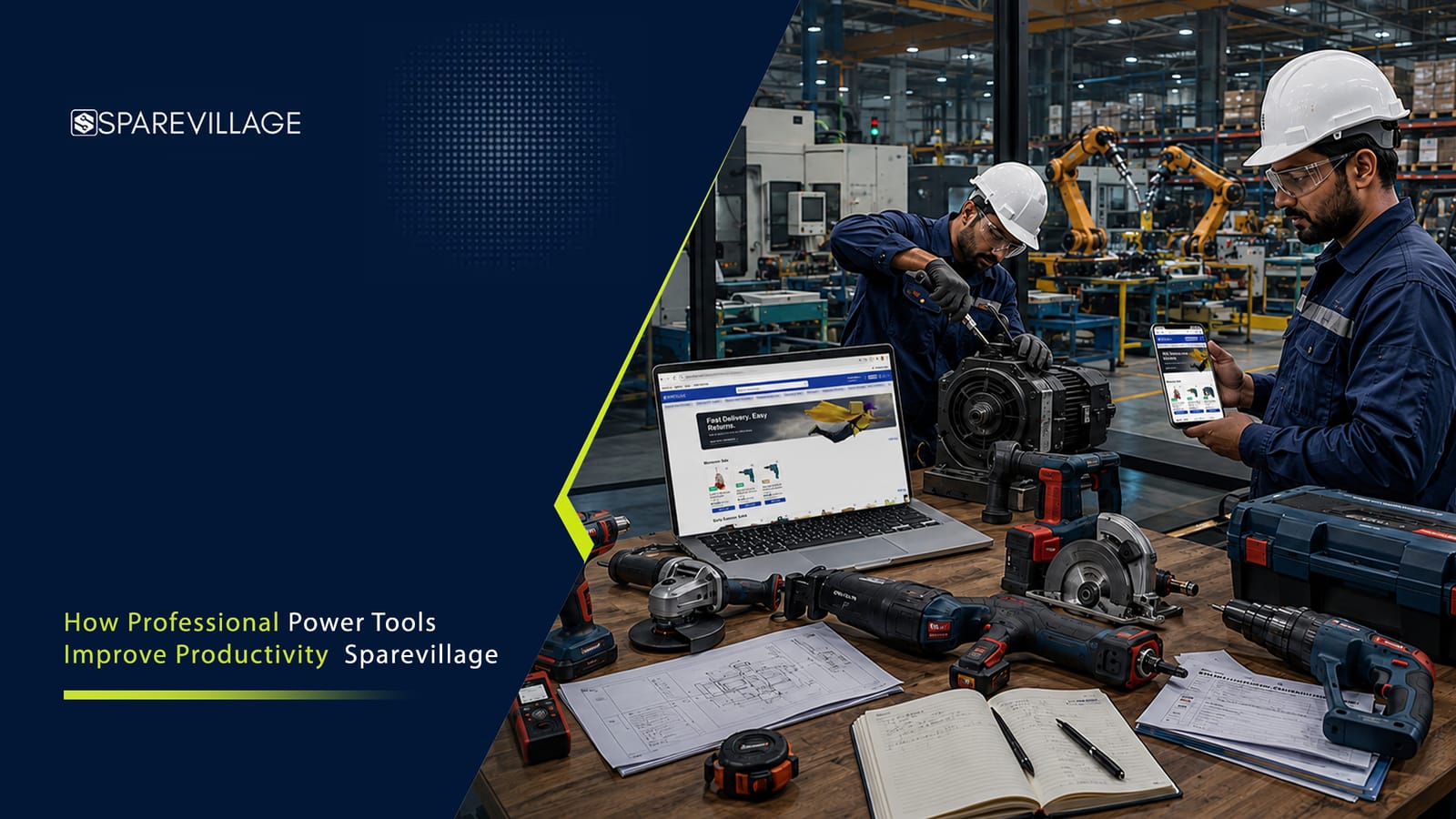
How Professional Power Tools Improve Productivity | Sparevillage
How professional power tools improve productivity, cut downtime, and reduce costs. Buy genuine industrial power tools online at Sparevillage.
Article Content
Intro :
Every workshop owner knows this problem. A job that should take two hours takes four. The tool works, but slowly. The operator gets tired faster. The output drops by evening. This is not a labor problem. This is a tool problem.
Professional power tools are built for one purpose. They cut work time without cutting work quality. That single fact changes how a business runs, how fast it delivers, and how much it earns per shift.
This article breaks down exactly how professional power tools improve productivity on the floor, what separates them from cheaper alternatives, and how to choose the right ones for an industrial or workshop setup.
Why Productivity Depends More on Tools Than People
Most buyers think productivity is a manpower issue. Hire more workers, get more output. That logic works only up to a point. Beyond that, the tool becomes the bottleneck.
A worker using a low-power drill machine spends extra minutes per hole. Multiply that by hundreds of holes a day, and hours are lost. A worker using a professional grade drill or angle grinder finishes the same task in half the time, with less physical strain.
This is the real difference. Power tools don't just do the work faster. They reduce fatigue, reduce rework, and reduce downtime. All three feed directly into productivity.
What Makes a Power Tool "Professional Grade"
Not every power tool with a metal body is professional grade. The difference lies in a few specific factors.
1. Motor strength and duty cycle Professional tools run longer without overheating. A consumer-grade tool might handle 15-20 minutes of continuous use. A professional tool can run for hours under industrial load.
2. Build material Industrial power tools use reinforced housings, better bearings, and heavier gauge wiring. This isn't about looks. It's about how many work cycles the tool survives before failure.
3. Precision and control Professional tools give consistent torque, consistent speed, and better grip control. This matters when the job needs accuracy, not just speed.
4. Safety features Overload protection, thermal cutoffs, and anti-vibration handles are standard in professional tools. These features protect both the operator and the tool itself.
If you're unsure what separates a real professional tool from a marketing label, this guide on the complete buyer's guide to industrial power tools breaks it down in more detail.
Direct Ways Professional Power Tools Improve Productivity
1. Faster Task Completion
This is the most obvious benefit. A cordless impact driver finishes a fastening job in seconds that would take a manual tool minutes. An angle grinder cuts through metal in one clean pass instead of three rough ones.
Speed compounds across a full shift. A tool that saves five minutes per task, repeated fifty times a day, saves over four hours of labor time. That's nearly half a working day recovered.
2. Reduced Operator Fatigue
Fatigue is a silent productivity killer. Workers using heavy, poorly balanced tools tire faster. Tired workers slow down, make more errors, and need more breaks.
Professional power tools are engineered for ergonomic balance. Better grip design, lower vibration, and lighter alloy bodies mean the operator can work longer without physical strain. Less fatigue means consistent output through the entire shift, not just the first two hours.
3. Fewer Breakdowns, Less Downtime
Downtime is expensive. Every minute a tool is broken, the job stops, and labor cost keeps running. Cheap tools fail more often under continuous industrial use.
Professional power tools that reduce maintenance costs are built with better internal components, which means fewer failures and fewer repair cycles. For a deeper look at how tool quality connects to maintenance spending, read professional power tools that reduce maintenance costs.
4. Better Accuracy Reduces Rework
Rework is a hidden productivity loss. A crooked hole, an uneven cut, or an over-torqued bolt means the job has to be redone. That's double the time for one task.
Professional tools offer better control over speed, torque, and depth. This precision cuts down rework significantly, which directly protects productivity numbers.
5. Multi-Tasking Capability
Many professional tools today come with interchangeable attachments, multiple speed settings, and modular designs. One tool can now do the job of two or three older single-function tools. This reduces tool-switching time and keeps the workflow moving.
Productivity Numbers Don't Lie
Consider a simple example. A furniture manufacturing unit switches from standard drills to professional cordless drills with brushless motors.
Task time per unit drops by 20%
Battery downtime reduces because brushless motors use less power
Operator complaints about hand fatigue reduce
Daily output per worker increases by roughly 15-18%
These aren't rare numbers. Manufacturing units, fabrication shops, and MRO teams across India report similar gains after upgrading to professional-grade tools.
Common Buying Mistakes That Hurt Productivity
Buying the wrong tool can actually reduce productivity, not improve it. Some frequent mistakes include:
Choosing based on price alone, ignoring duty cycle
Buying underpowered tools for heavy-duty tasks
Ignoring battery life and charging time for cordless tools
Not checking spare part availability before purchase
Overlooking after-sales support and warranty terms
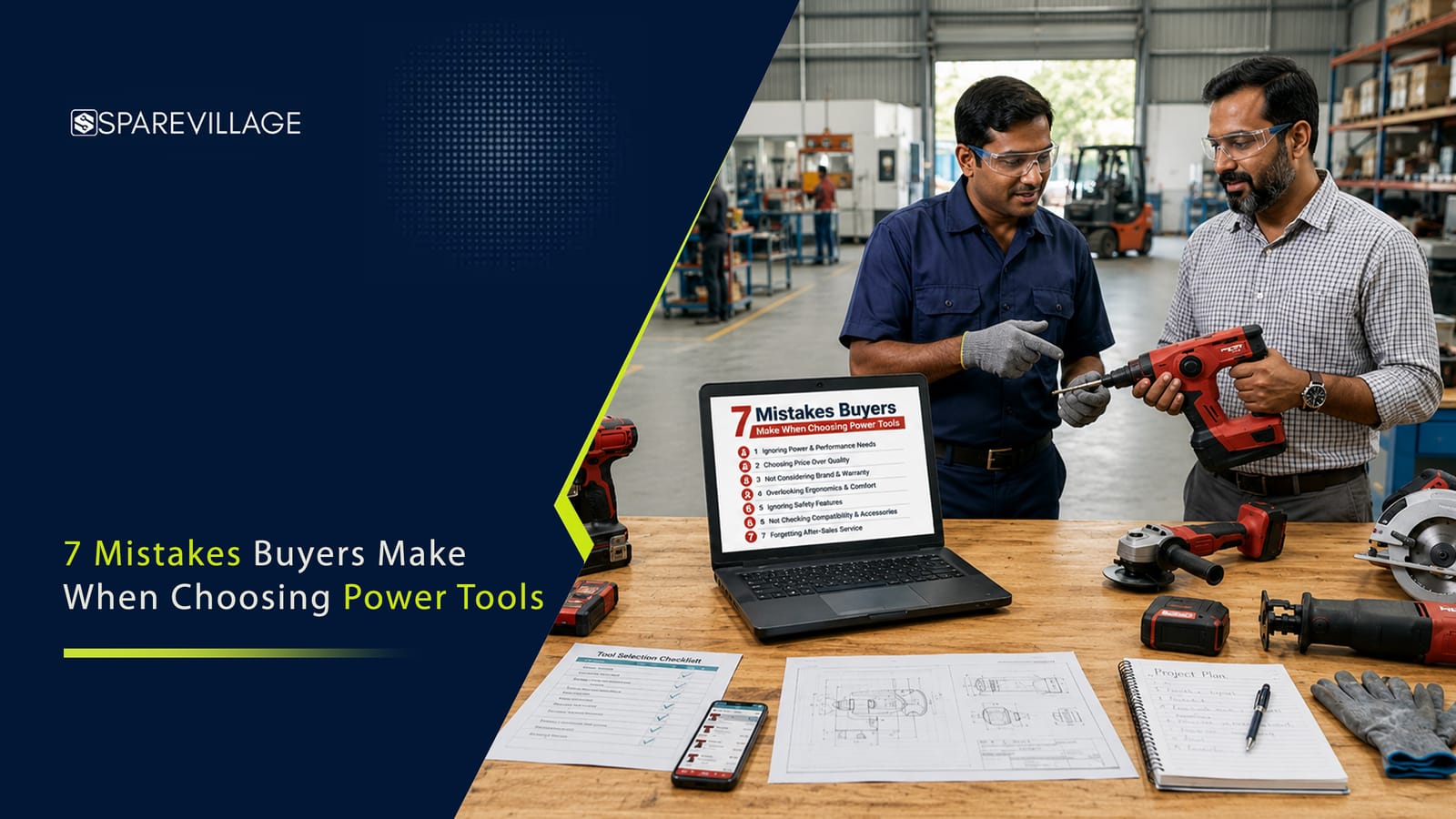
These mistakes cost more in the long run than the initial savings. For a full breakdown, check 7 mistakes buyers make when choosing power tools and avoid these mistakes when buying power tools.
How to Choose the Right Power Tools for Productivity Gains
Match the Tool to the Task Load
Don't buy a general-purpose drill for continuous industrial drilling. Match motor power and duty cycle to actual daily usage. A tool underrated for the job will burn out fast and slow down output.
Prioritize Brand Reliability
Established brands like Bosch, Turtle Gold, Makita, and Dewalt invest in motor technology, safety design, and quality control. This reliability translates into fewer breakdowns and steady productivity.
Check Ergonomics Before Buying
Weight, grip design, and vibration control affect how long a worker can use the tool without fatigue. If possible, test the tool physically before bulk purchase.
Look at Total Cost of Ownership
Cheaper tools often cost more over time due to repairs and replacements. Compare the purchase price against expected maintenance and lifespan. This is where professional power tools that reduce maintenance costs actually save money.
Build a Standard Tool List
For consistent productivity across teams, standardize the tools used. An essential professional power tools list for industrial buyers helps procurement teams avoid random purchases and keep quality consistent across departments.
Use a Structured Buying Checklist
Before any bulk order, run through a proper checklist covering power rating, warranty, spare parts, safety certification, and after-sales service. A 12-point power tools buying checklist for professionals makes this process faster and reduces buying errors.
Maintenance: The Overlooked Productivity Factor
Buying the right tool is only half the job. Maintenance decides how long that productivity gain lasts.
Simple habits extend tool life significantly:
Clean tools after every shift, especially in dusty environments
Store batteries at proper charge levels, not fully drained or overcharged
Check carbon brushes and bearings on a fixed schedule
Lubricate moving parts as per manufacturer guidelines
Replace worn accessories before they damage the main tool
Workshops that follow structured maintenance routines report longer tool life and fewer sudden breakdowns. For a complete maintenance approach, see how to maintain power tools like a professional workshop.
Industrial Buyers Need a Different Approach
Retail buyers and industrial buyers don't shop the same way. Industrial buyers deal with bulk purchases, recurring maintenance, spare part sourcing, and vendor reliability. A wrong decision at scale multiplies losses across multiple units and shifts.
This is why industrial procurement teams need a structured buying process, not impulse purchases. An industrial buyer's guide to professional power tools covers sourcing strategy, vendor evaluation, and bulk purchase considerations specifically for B2B buyers.
Where to Source Professional Power Tools
Sourcing matters as much as tool selection. Buying from unreliable sellers often means fake products, no warranty support, and poor spare part availability.
Sparevillage is a B2B marketplace built specifically for industrial buyers. It connects businesses with verified sellers of power tools, spare parts, and MRO supplies across categories like drilling, grinding, cutting, and fastening equipment.
Buying power tools from Sparevillage gives industrial buyers a few direct advantages:
Access to genuine, brand-verified power tools
Bulk pricing suited for workshops and manufacturing units
Spare parts availability for long-term maintenance
A single platform for tools across multiple categories
Support built around B2B buying needs, not retail shopping
For businesses planning bulk purchases or setting up a new production line, Sparevillage removes the guesswork from sourcing decisions.
Conclusion:
Productivity doesn't come from working harder. It comes from working with the right equipment. Professional power tools reduce task time, cut down fatigue, lower rework, and reduce downtime. Together, these factors change what a team can achieve in a single shift.
The upgrade cost of professional tools looks higher on paper. But over months of operation, the productivity gain and maintenance savings outweigh that initial cost easily.
Before the next bulk purchase, review your current tool list, check where slowdowns happen most, and match tools to actual task demand. That single step often reveals more productivity gains than any process change on the floor.
For genuine, industrial-grade power tools built for real productivity, explore the full range available on Sparevillage.
FAQs
What makes professional power tools better than regular ones on Sparevillage?
Professional tools use stronger motors and better internal parts. They handle longer work hours without overheating. Build quality is higher, so they survive daily industrial use. Grip design reduces hand fatigue during long shifts. Precision control lowers rework and errors. Overall, they save time and cut repair costs compared to standard tools.
How do power tools improve daily productivity on Sparevillage?
They reduce task time significantly. A single job finishes faster with steady power output. Workers face less fatigue, so output stays consistent through the shift. Fewer breakdowns mean less downtime on the floor. Better accuracy also reduces rework. Together, these factors add up to noticeably higher daily output per worker.
Which power tool brands are trusted for industrial use on Sparevillage?
Bosch, Turtle Gold, Makita, and Dewalt are widely trusted names. These brands focus on motor durability, safety features, and consistent build quality. They offer better warranty support and easier spare part access. For industrial buyers, this reliability reduces sudden failures and keeps maintenance costs predictable over the tool's working life.
How can buyers avoid common mistakes when purchasing power tools on Sparevillage?
Avoid choosing tools based on price alone. Check the duty cycle before buying for heavy tasks. Confirm spare part availability in advance. Review warranty and after-sales support terms clearly. Test ergonomics if possible before bulk orders. Following a structured checklist during purchase prevents most common buying errors and future losses.
Why does power tool maintenance matter for productivity on Sparevillage?
Poor maintenance leads to frequent breakdowns and downtime. Regular cleaning prevents dust damage inside the tool body. Correct battery charging habits extend battery life. Checking bearings and brushes on schedule avoids sudden failures. Proper maintenance keeps tools running at full efficiency, protecting both productivity and the total cost of ownership.
Is it safe to buy power tools in bulk from Sparevillage?
Yes. Bulk buying works well when sourced from a verified B2B platform. Genuine products come with proper warranty coverage. Spare parts stay available for future maintenance needs. Pricing is usually better for larger orders. Verifying seller credentials and product certification before purchase further ensures safety and long-term reliability for industrial use.
Are cordless power tools better than corded ones for productivity, according to Sparevillage?
Cordless tools offer more mobility on the floor. Workers move between tasks without cable restrictions. Battery technology today handles most industrial workloads well. Charging time has also dropped significantly with newer models. Corded tools still suit fixed heavy-duty stations. The right choice depends on task type and workspace layout.
How often should industrial power tools be serviced, based on Sparevillage guidelines?
Servicing frequency depends on daily usage hours. Tools under continuous heavy use need monthly checks. Lighter use tools can follow a quarterly schedule. Cleaning after every shift is recommended regardless of frequency. Bearings, brushes, and cables should be inspected regularly. Following a fixed schedule prevents unexpected breakdowns and extends tool lifespan.
What should a buyer check first before ordering power tools on Sparevillage?
Start with the task requirement and load type. Match motor power and duty cycle accordingly. Check brand reliability and warranty terms next. Confirm spare part availability for future repairs. Review seller ratings and product certification. This sequence helps avoid mismatched purchases and reduces the chance of early tool failure.
Do professional power tools really reduce long-term costs for buyers on Sparevillage?
Yes, in most cases. Higher build quality means fewer repairs over time. Longer tool life reduces replacement frequency. Better efficiency also lowers energy or battery consumption. Downtime drops due to fewer breakdowns. While the upfront price is higher, total ownership cost usually turns out lower across the tool's working lifespan.